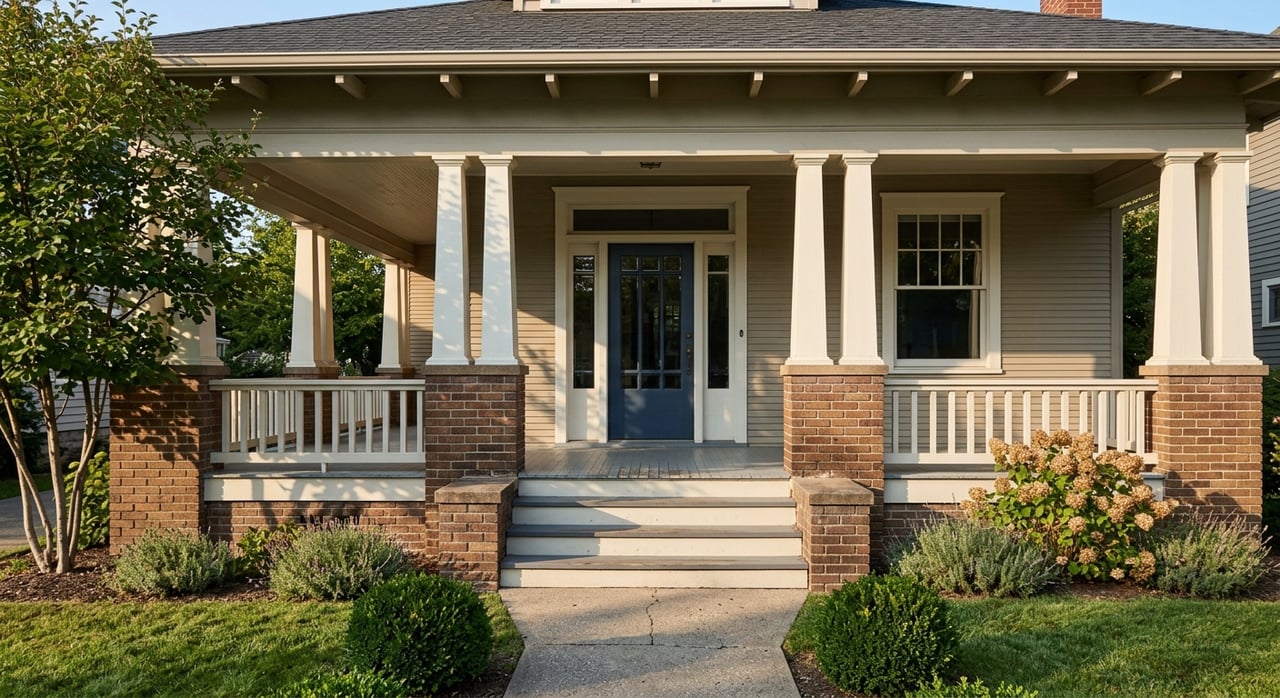
Wondering whether a Congress Park bungalow or foursquare is the better fit for your next move? In this part of Denver, charm is easy to find, but not every older home offers the same layout, lot value, or update history. If you are shopping in Congress Park, understanding how these homes differ can help you make a smarter offer and avoid surprises once you are under contract. Let’s dive in.
Congress Park housing has real variety
Congress Park is generally bounded by Colfax Avenue, Colorado Boulevard, East 6th Avenue, and York Street. The neighborhood began as Capitol Heights in the late 1880s, and much of its growth was shaped by tramway development.
A large share of the neighborhood was built between 1900 and 1929. Historic Denver found that nearly 80% of buildings date to that period, and 83% of those were originally built as single-unit homes. That helps explain why Congress Park still feels defined by older detached homes rather than newer teardown-driven redevelopment.
Still, the neighborhood is not visually uniform. According to the Denver Public Library, the northwest area includes older Queen Anne and Victorian homes, while other sections transition into Craftsman Denver Squares and then more modest bungalows as you move southeast. For you as a buyer, that means block-by-block differences matter just as much as the home’s basic style.
Bungalows vs. foursquares in Congress Park
In Congress Park, bungalows and foursquares are the two house types buyers most often compare. Historic Denver recorded 968 bungalows and 329 foursquares among single-unit buildings in the survey area, with bungalows making up 51.3% of single-unit homes.
What defines a bungalow
A bungalow is typically a one- to one-and-a-half-story home with a low roof, broad front porch, wide eaves, and heavier porch supports. In Congress Park, bungalows can show up in several architectural styles, including Craftsman, Mediterranean Revival, English Norman Cottage, and homes classified as No Style.
That range matters because two homes may both be called bungalows but feel very different in person. One may have original woodwork and built-ins, while another may lean more toward a simplified, updated interior with fewer preserved details.
What defines a foursquare
A foursquare is usually a boxier two-story home with a hipped roof, front porch, and overhanging eaves. In practical terms, these homes often offer a more stacked, symmetrical layout than a bungalow.
For some buyers, that can mean better bedroom separation and more usable second-floor space. If you want a home that feels more vertical and less spread out, a foursquare may fit your priorities better.
Why the distinction matters for buyers
The biggest difference is often how the home lives day to day. Bungalows may appeal to buyers who like a cozier footprint, a strong connection to the front porch, and the possibility of main-floor living. Foursquares may appeal to buyers who want more defined rooms and a traditional two-story layout.
That said, original form is only part of the story in Congress Park. Because many homes have been remodeled over time, you need to look beyond the label and study the actual floor plan, basement use, ceiling heights, and the quality of any expansion.
Lot size can change the value fast
In Congress Park, lot size is one of the clearest factors that separates comparable sales. Even homes with similar square footage and style can price differently based on parcel size, placement, and expansion potential.
Recent examples show how much spread exists. One home sat on a 5,410-square-foot corner lot, another on a 5,940-square-foot elevated lot, and another on a 6,420-square-foot oversized lot. A property on Detroit Street was marketed as a .22-acre three-full-lot parcel, with Redfin noting that only a handful of lots like it had come to market in the prior 10 years.
For you, that means a corner lot, alley access, a larger yard, or space for a garage or addition may materially affect both price and long-term utility. In a neighborhood with older homes, land value and future flexibility can be just as important as the house itself.
Renovation quality often drives the premium
Buyers in Congress Park are rarely comparing untouched historic homes to each other. More often, you are comparing different levels of renovation, maintenance, and systems work.
Recent listings have emphasized updated kitchens with quartz counters and stainless appliances, finished basements, new roofs, new electrical panels, newer furnaces and air conditioning, replacement windows, and occasional pop-top additions. That pattern suggests the strongest prices often go to homes that preserve original character while also delivering modern function.
Well-marketed examples in the neighborhood have highlighted original woodwork, leaded glass, built-in bookshelves, hardwood floors, fireplaces, and covered front porches alongside newer kitchens and finished lower levels. In other words, buyers are often paying a premium for homes that feel authentic but not outdated.
What to inspect before you buy
Because most Congress Park homes were built before 1930, inspections matter. Older housing stock can be wonderful to own, but it often comes with layers of repairs, partial updates, and remodeling done across different decades.
A practical due-diligence checklist should include:
- Roof condition
- Window age and performance
- Electrical system updates
- Plumbing condition
- HVAC age and function
- Quality of basement finishes
- Quality of any addition or expansion work
This is especially important when a home looks turnkey on the surface. A beautiful kitchen does not always tell you whether the electrical panel, drainage, or mechanical systems were updated to the same standard.
Two Colorado-specific checks to prioritize
If you are buying in Congress Park, two items deserve extra attention.
First, homes built before 1978 are more likely to contain lead-based paint. Since much of Congress Park predates that year by decades, lead awareness should be part of your normal review process.
Second, the Colorado Department of Public Health and Environment says about one in two Colorado homes has radon levels above the U.S. action level. In a neighborhood with older homes and frequent basement use, radon testing is not a fringe concern. It is a standard box to check.
What the market tells buyers right now
Public portals use different methods, so you will see some variation in reported numbers. Even so, they paint a consistent picture of Congress Park as a higher-priced, active market.
Redfin reported a March 2026 median sale price of $861,000 and 24 days on market. Zillow reported an average home value of $774,477 and 18 days to pending as of March 31, 2026. Realtor.com reported a median listing price of $750,000, 65 homes for sale, and 26 median days on market.
Some sources describe the market as very competitive, while others label it balanced. For you, the takeaway is simple: expect demand, but do not assume every listing behaves the same way. Condition, lot size, location within the neighborhood, and renovation depth can all shift how fast a home moves and how aggressively you may need to write.
How to shop smarter in Congress Park
If you are serious about buying here, it helps to compare homes through a neighborhood-specific lens rather than a citywide one. Congress Park rewards buyers who slow down and look closely at the details.
A smart approach includes:
- Comparing homes by block, not just by neighborhood name
- Looking at lot size and parcel shape alongside interior square footage
- Separating cosmetic updates from system upgrades
- Asking how much original character remains
- Reviewing basement finish quality and legal usability carefully
- Understanding whether an addition or pop-top feels integrated or pieced together
This is where local market analysis matters. Two homes with the same bedroom count may not be true substitutes if one has a much better lot, more complete systems updates, or a more coherent renovation.
Why buyers need block-level guidance
Congress Park is one of those Denver neighborhoods where broad descriptions only get you so far. The housing stock has consistency in age, but not in presentation, condition, or buyer appeal.
That is why buyers benefit from looking beyond the listing photos and into the real drivers of value. House form, lot characteristics, update quality, and micro-location all shape what a home is worth and how it may perform for you over time.
If you want help comparing Congress Park bungalows and foursquares, building a smart offer strategy, or understanding what really drives value from one block to the next, reach out to Stephen LaPorta for thoughtful, data-driven guidance tailored to your home search.
FAQs
What is the difference between a Congress Park bungalow and a Congress Park foursquare?
- A Congress Park bungalow is typically a one- to one-and-a-half-story home with a low roof and broad porch, while a Congress Park foursquare is usually a boxier two-story home with a hipped roof and more vertical layout.
How old are most homes in Congress Park Denver?
- Historic Denver found that nearly 80% of buildings in Congress Park date from 1900 to 1929, so many buyers should expect older construction and layered updates.
Why does lot size matter in Congress Park real estate?
- Lot size can strongly affect value because larger parcels, corner lots, alley access, and room for additions or garages may offer more flexibility and stronger long-term utility.
What should buyers inspect in a Congress Park historic home?
- Buyers should pay close attention to the roof, windows, electrical, plumbing, HVAC, basement finish quality, and the workmanship of any additions or major remodels.
Should buyers test for radon in Congress Park Denver homes?
- Yes. The Colorado Department of Public Health and Environment says about one in two Colorado homes has radon above the U.S. action level, so radon testing is a standard part of due diligence.
Is the Congress Park Denver housing market competitive?
- Current portal data suggests Congress Park is a higher-priced, active market, but competitiveness can vary by home depending on condition, lot size, update quality, and exact location within the neighborhood.