If you want a neighborhood where you can grab coffee, stroll to dinner, and catch a train into Denver without making your whole day revolve around driving, Olde Town Arvada deserves a close look. For many buyers, this area stands out because it blends historic character, everyday convenience, and a growing transit-focused lifestyle. In this guide, you’ll get a practical look at what living in Olde Town Arvada along the G Line can feel like, what kinds of homes you’ll find, and what tradeoffs to keep in mind. Let’s dive in.
Why Olde Town Arvada stands out
Olde Town is Arvada’s historic downtown, and it has a distinct identity within the city. According to the City of Arvada, the district includes a wide range of building types and uses, from single-family homes to retail, office, and mixed-use buildings. That mix helps the area feel both lived-in and active throughout the day.
You can also see that identity in the way the district is described and managed. The city emphasizes pedestrian-oriented design, while the Historic Olde Town Arvada Association promotes the area as a vibrant shopping district for residents, businesses, and visitors. Olde Town is also listed on the National Register of Historic Places and has National and Colorado Main Street designations.
For you as a buyer, that means Olde Town is not just another suburban pocket with a few shops nearby. It is a neighborhood with an established downtown pattern, long-term civic investment, and a clear sense of place.
How the G Line shapes daily life
The G Line is one of the biggest reasons Olde Town gets attention from buyers who want flexibility in their routine. RTD describes it as an 11.2-mile electric commuter rail line with 30-minute service connecting Denver Union Station to Wheat Ridge through northwest Denver, Adams County, and Arvada. Service began in April 2019, and Olde Town has one of Arvada’s most prominent stations.
The City of Arvada describes the Olde Town Hub as an important retail, mixed-use, and cultural destination. That matters because the station is not tucked away on the edge of the neighborhood. It is part of how Olde Town functions day to day.
If you commute to downtown Denver, meet clients in the city, or simply like having another option besides driving, the G Line can be a real quality-of-life feature. For many households, it supports a more car-light routine, especially when combined with walkable errands and nearby dining.
What the transit hub offers
The Olde Town Transit Hub adds another layer of convenience. The City of Arvada says the hub includes 600 parking spaces shared by RTD passengers and visitors. The city also notes that parking is free for now while overall use is being studied.
That setup can make Olde Town more practical whether you live nearby or visit often. It supports train access, local business activity, and the neighborhood’s role as a destination within Arvada.
What to know about current projects
Olde Town is still evolving, and that is worth knowing up front. The city’s Yukon Streetscape project is designed to improve walkability with wider sidewalks, safer crossings, and a more comfortable pedestrian environment. These kinds of upgrades can strengthen the long-term appeal of the area.
At the same time, as of March 2026, the city notes that library redesign work and power-line undergrounding may temporarily affect travel in Olde Town. So if you are touring homes or thinking about daily access, it helps to view the area with both the long-term vision and short-term disruptions in mind.
Walkability and everyday convenience
One of Olde Town’s biggest strengths is how many daily activities can happen within a compact area. The neighborhood is known for locally owned shops, restaurants, and bars, and that mix creates a routine that feels more connected and less car-dependent than many suburban settings.
You are not just looking at a place where you sleep and leave. You are looking at a neighborhood where errands, meals, social plans, and transit can overlap in a practical way. That is a major draw for buyers who want energy and convenience without being in central Denver.
The city’s pedestrian-focused planning reinforces that direction. Wider sidewalks and safer crossings are not just cosmetic upgrades. They support the kind of street life and comfort that help a mixed-use district work well over time.
Shops, dining, and local character
Olde Town’s business mix plays a big part in its appeal. Both the City of Arvada and HOTA highlight the district’s locally owned businesses, and Visit Arvada points to examples such as Electric Cherry Shop + Studios, Olde Town Flower Shoppe, and Carly’s Boutique.
For you, that local-business presence can shape the neighborhood experience more than a big national retail lineup would. It often means more variety, more personality, and a stronger sense that the area has its own rhythm.
That character can also support resale appeal. Buyers are often drawn to neighborhoods with a recognizable downtown, established identity, and independent business scene because those qualities are hard to replicate.
Community events add to the lifestyle
A neighborhood can look great on a map and still feel flat in real life. Olde Town avoids that problem in part because of its recurring community events. HOTA lists events such as the Farmers Market, Flicks in the Square, Festival of Scarecrows, Trick or Treat Street, Chocolate Affair, National Night Out, and holiday celebrations.
These events help show that Olde Town functions as an active community center, not just a shopping area. If you are deciding where to buy, that can matter as much as square footage or finishes because it shapes how often you actually use and enjoy the neighborhood.
For some buyers, this kind of programming becomes a major lifestyle advantage. It creates built-in opportunities to get out, explore local businesses, and feel more connected to where you live.
Housing options in Olde Town Arvada
Olde Town offers a broader housing mix than many buyers expect. In the OT-RN district, the City of Arvada allows single-family detached homes, duplexes, multiplexes, boarding houses, and live-work units. In the OT-OW district, the city allows an even broader mix that can include single-family, duplex, multifamily, mixed-use, parking-structure, civic, retail, and restaurant forms.
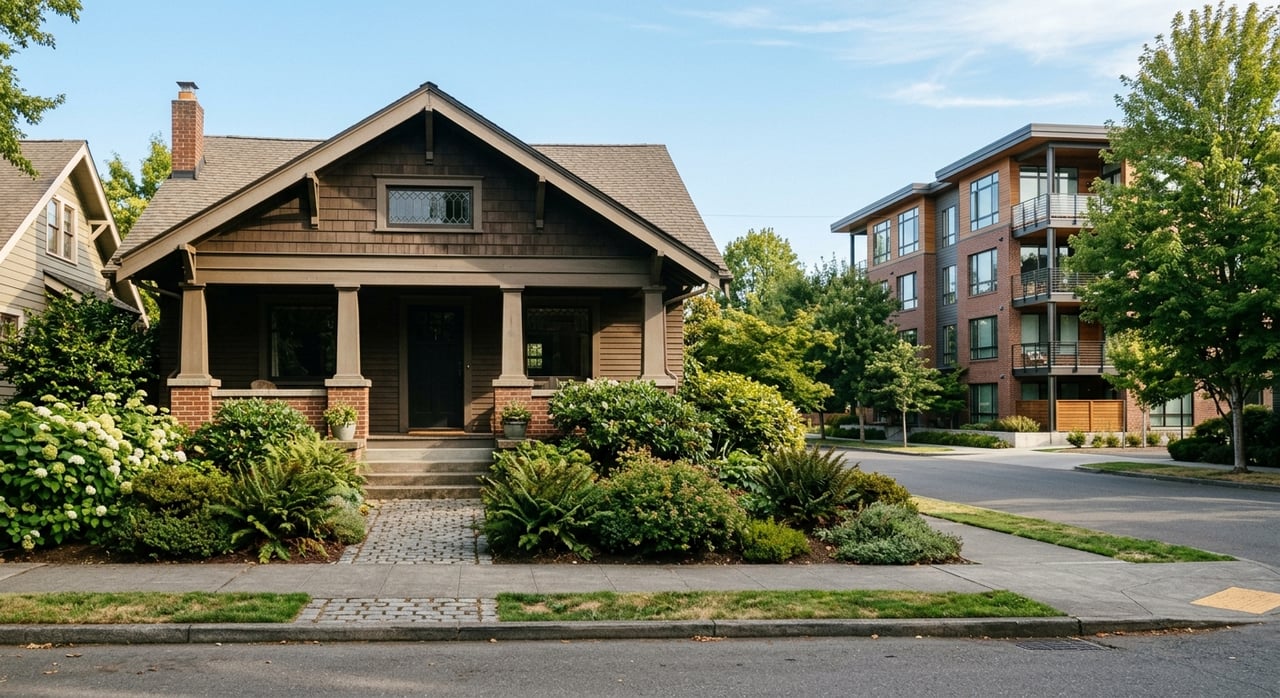
That flexibility helps explain why Olde Town can feel residential and urban at the same time. Depending on the block, you might see historic homes, small multifamily buildings, newer apartments, or mixed-use projects closer to the core.
If you are searching for a condo, townhome-style option, or a detached home near a walkable district, this variety can be a real advantage. It gives you more ways to match your budget and lifestyle goals within the same general neighborhood.
Historic homes and newer infill
Part of Olde Town’s appeal comes from its older housing stock. A city historic survey describes the area’s housing evolution as a transition from bungalow-era homes to early ranch homes. That gives many streets a sense of architectural character that buyers often find appealing.
At the same time, newer infill and transit-oriented development are part of the story. The city has described Olde Town Residences as a six-level project with walk-up apartments, and RTD notes that the adjacent station-area project includes a 650-space parking garage, transit hub, bus facility, and future transit-oriented development on a nine-acre site.
In practical terms, Olde Town is not frozen in time. It is a neighborhood where character homes, apartments, and new mixed-use development exist side by side.
Is Olde Town right for your lifestyle?
Olde Town can be a strong fit if you value access, local businesses, and a neighborhood that feels active beyond just housing. It may especially appeal to buyers who want easier train access to Union Station, enjoy walking to dining and events, or prefer a home near an established downtown setting.
It may be less ideal if you want a quieter, more purely residential environment with fewer visitors and less ongoing public improvement work nearby. Olde Town’s strengths come with activity, change, and some of the tradeoffs that usually follow a successful mixed-use district.
That is why it helps to look beyond listing photos. When you tour Olde Town, pay attention to block-by-block feel, station proximity, parking patterns, and how the commercial areas fit your daily routine.
Why long-term fundamentals matter
Olde Town’s long-term appeal is about more than current buzz. The neighborhood combines National Register status, Main Street identity, and a 20-year strategic reinvestment plan guided by principles the city describes as Vibrant, Distinct, Connected, and Resilient.
Those factors do not guarantee any specific market outcome, but they do show sustained public and community attention. For buyers, that kind of long-range commitment can be meaningful because it suggests Olde Town is a place Arvada is continuing to shape and strengthen over time.
If you are comparing Arvada neighborhoods, this is one reason Olde Town often stands apart. It offers both established character and an active future-facing plan.
If you are thinking about buying or selling in Olde Town Arvada, working with a local, data-driven agent can help you weigh neighborhood fit, pricing, and property-level tradeoffs with more confidence. For tailored guidance on homes, condos, and local market strategy, connect with Stephen LaPorta.
FAQs
What is Olde Town Arvada like for daily living?
- Olde Town Arvada offers a mixed-use, walkable setting with homes, shops, restaurants, bars, and access to the G Line, giving many residents a more connected daily routine.
How often does the G Line run in Olde Town Arvada?
- RTD says the G Line provides 30-minute service between Denver Union Station and Wheat Ridge, with Olde Town as one of Arvada’s key stations.
What kinds of homes are in Olde Town Arvada?
- The area includes a mix of single-family homes, duplexes, multiplexes, multifamily buildings, live-work units, apartments, and mixed-use development.
Does Olde Town Arvada have historic homes?
- Yes. City historic survey information describes housing in and around Olde Town as including bungalow-era homes and early ranch homes.
Is Olde Town Arvada walkable?
- Olde Town is one of Arvada’s clearest pedestrian-oriented districts, and the city is continuing walkability improvements through projects like the Yukon Streetscape plan.
Are there community events in Olde Town Arvada?
- Yes. HOTA lists recurring events such as the Farmers Market, Flicks in the Square, Festival of Scarecrows, Trick or Treat Street, Chocolate Affair, National Night Out, and holiday celebrations.